
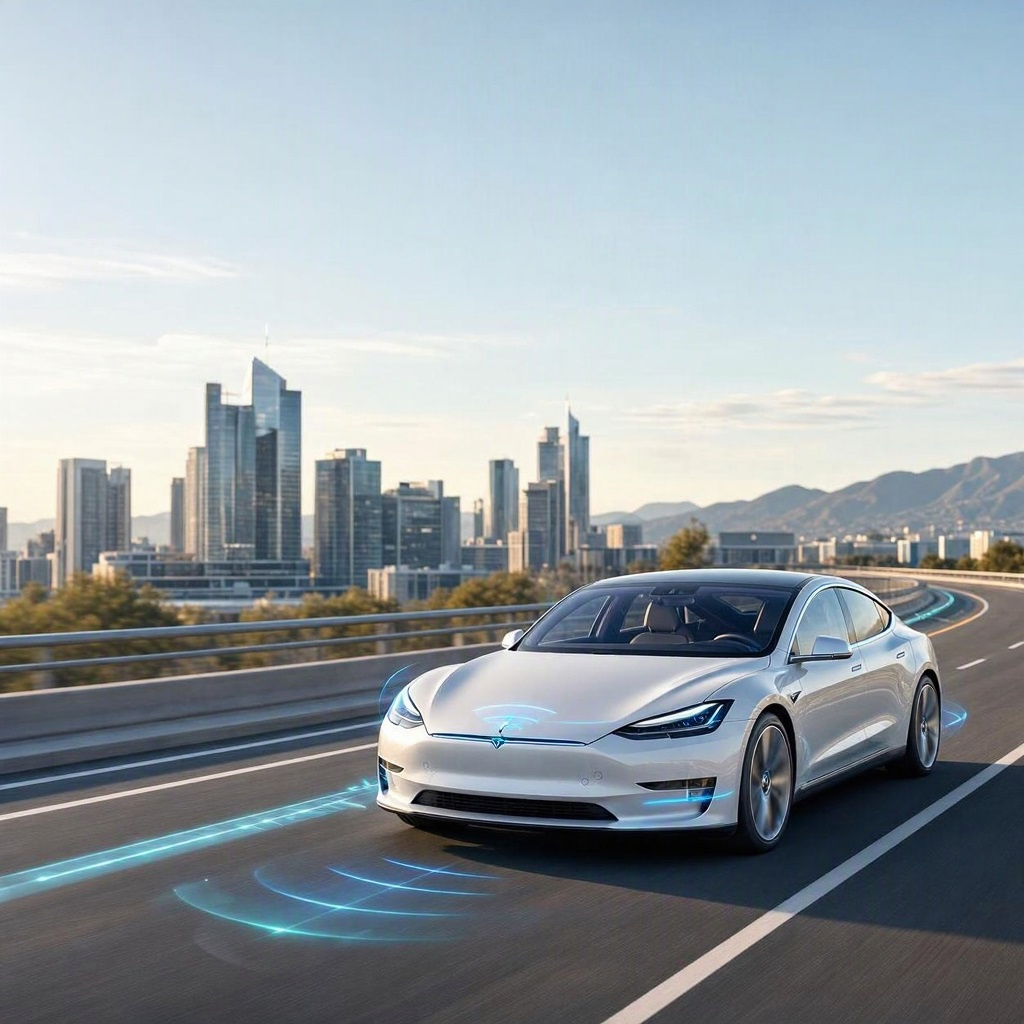
Tesla Autopilot is one of the most recognized driver-assistance systems in the automotive industry. Designed to make driving more convenient, it uses cameras, onboard computers, and advanced software to help drivers with certain driving tasks. However, understanding what Tesla Autopilot can and cannot do is essential before relying on it on the road.
What Is Tesla Autopilot?
Tesla Autopilot is a collection of driver-assistance features available in many Tesla vehicles. Depending on the vehicle model, equipment, software version, and region, these features can help maintain a vehicle’s speed, keep it within its lane, and adjust its speed in response to traffic.
Despite its name, Tesla Autopilot does not make a vehicle fully autonomous. Drivers must remain attentive, monitor the road, and be ready to take control whenever necessary.
How Does Tesla Autopilot Work?
Tesla vehicles use onboard cameras and computer vision software to interpret their surroundings. Depending on the model and configuration, the system processes information about road markings, nearby vehicles, pedestrians, and other visible objects.
The software uses this information to support driver-assistance functions. Over-the-air software updates may introduce improvements or changes to supported features, although availability varies by vehicle and location.
Tesla’s approach relies heavily on camera-based perception in many of its vehicles. The precise hardware and capabilities depend on the particular vehicle generation and configuration.
Main Features of Tesla Autopilot
The features available under Tesla Autopilot can vary, but common functions include the following:
Traffic-Aware Cruise Control
Traffic-Aware Cruise Control helps maintain a selected cruising speed while adjusting the vehicle’s speed to maintain distance from the vehicle ahead. It can be useful during highway driving and in changing traffic conditions.
Autosteer
Autosteer assists with steering to help keep the vehicle within its detected lane. Drivers must continue monitoring the road and remain prepared to steer manually.
Enhanced Driver-Assistance Options
Some Tesla vehicles and software packages offer additional driver-assistance features beyond basic Autopilot. Availability depends on the vehicle, region, and purchased package. Features marketed under names such as Enhanced Autopilot or Full Self-Driving should not be confused with fully autonomous driving.
Is Tesla Autopilot Safe?
Tesla Autopilot can assist with certain driving tasks, but its safety depends on the circumstances and the driver’s attention. Road conditions, visibility, construction zones, unusual obstacles, and unclear lane markings can affect system performance.
Drivers should never assume that the system will recognize every hazard or respond correctly in every situation. They must follow the vehicle’s instructions, watch the road, and be ready to intervene immediately.
Before using Autopilot, owners should read the vehicle’s owner’s manual and follow applicable traffic laws. Driver-assistance technology is not a substitute for an attentive human driver.
Tesla Autopilot vs. Full Self-Driving
Tesla uses different names for its driver-assistance products, which can sometimes create confusion.
Basic Autopilot generally provides functions such as Traffic-Aware Cruise Control and Autosteer, where available. Enhanced Autopilot and Full Self-Driving capabilities may provide additional functions depending on the vehicle and market.
The exact features and their operating limitations can change with software updates. Importantly, the name Full Self-Driving does not mean that a vehicle can operate without driver supervision in all circumstances.
Does Tesla Autopilot Come Standard?
Many Tesla vehicles have included basic Autopilot features, but the available functions can vary by model, model year, market, and software configuration. Optional packages and subscriptions may be available for additional capabilities in certain regions.
Anyone considering a Tesla should check the current configuration and pricing for their specific country rather than relying on information from another market.
The Future of Tesla Autopilot
Driver-assistance systems continue to evolve as manufacturers improve computer vision, vehicle computing, and software. Tesla regularly develops software updates for its vehicles, while regulators and safety organizations continue to examine how these systems perform on public roads.
The long-term potential of this technology is significant, but progress toward greater automation must be accompanied by clear communication about system limitations, effective driver monitoring, and rigorous safety evaluation.
Final Thoughts
Tesla Autopilot offers useful driver-assistance features that can help with steering and speed control under appropriate conditions. Nevertheless, it is not a replacement for an attentive driver, and its capabilities differ across vehicles, software versions, and regions.
Understanding its features, limitations, and safety requirements allows Tesla owners and prospective buyers to make better-informed decisions about this increasingly important automotive technology.