
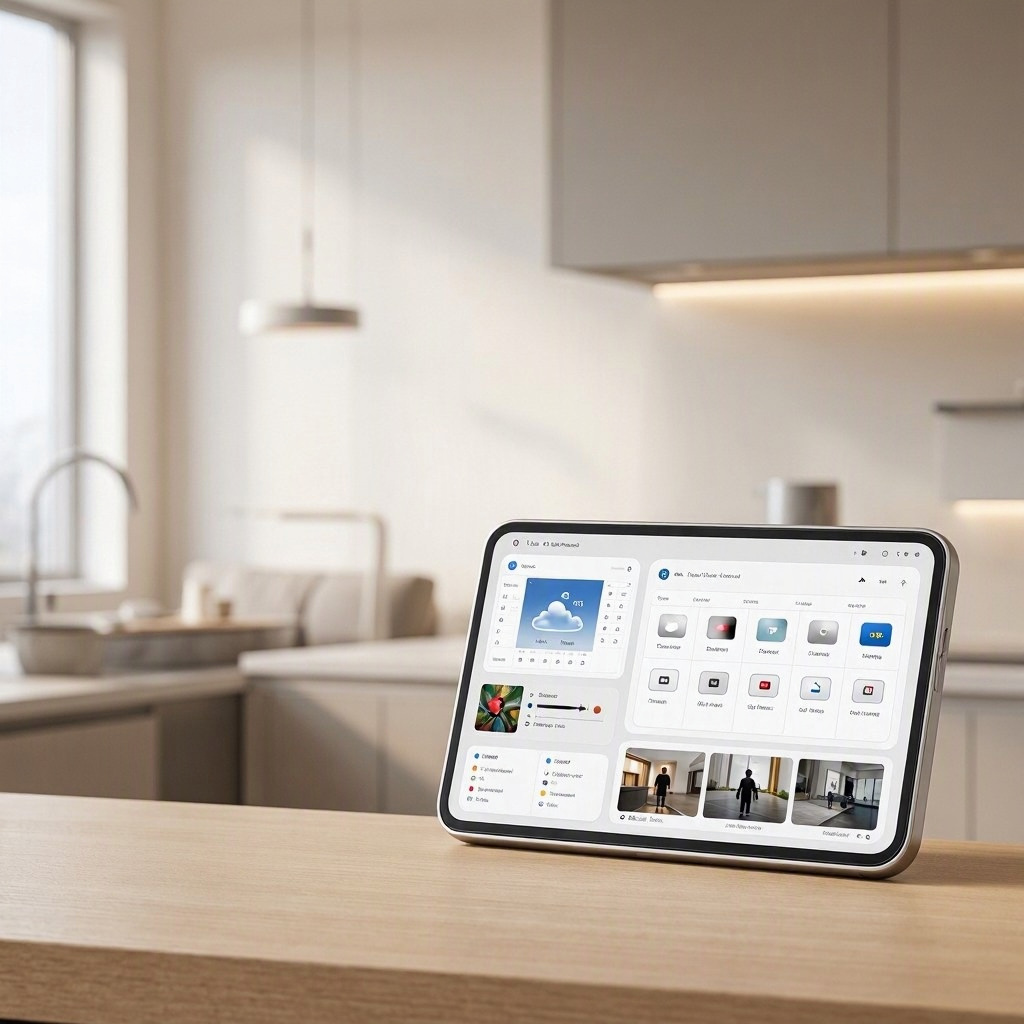
Apple HomeView is a new smart home device designed to bring entertainment, communication, and home automation together in one convenient place. Announced by Apple on October 13, 2026, the device combines a touchscreen display, an AI-powered Siri assistant, and smart home controls in a compact design intended for shared family spaces.
With Apple expanding its smart home ecosystem, HomeView offers a new way to manage connected devices, make video calls, listen to music, and access personalized information without constantly reaching for an iPhone.
What Is Apple HomeView?
Apple HomeView is a smart home display and central control hub powered by Apple Intelligence and Siri AI. It features a 7-inch Liquid Retina display and is designed to sit on a table or be mounted on a wall.
Unlike a traditional smart speaker, HomeView combines visual information with voice interaction. Users can check calendars, view compatible security cameras, control smart lights, adjust the thermostat, and access entertainment through a single interface.
Apple designed HomeView for households where several people share the same device but still want personalized experiences. The system can recognize up to six users and display individual content based on who is interacting with it. Official Apple announcement.
Apple HomeView Features
Apple HomeView combines several smart home and entertainment features in one device.
1. Siri AI and Apple Intelligence
One of the main highlights of Apple HomeView is its integration with Siri AI. Users can ask questions, request information, discover music, and interact with supported features using natural voice commands.
When paired with a compatible Apple Intelligence-enabled iPhone or iPad, Siri can also use relevant personal context from apps such as Messages and Calendar to provide more tailored assistance.
For example, users may ask about upcoming appointments, retrieve information from their schedules, or find relevant details without manually searching through multiple applications.
2. Smart Home Control
Apple HomeView acts as a central dashboard for compatible smart home accessories. Users can control lighting, adjust temperatures, lock doors, operate blinds, and view supported camera feeds.
The device also supports compatible accessories using Apple Home and Matter technologies, helping users connect supported products within Apple’s smart home ecosystem.
For households with several security cameras, the Home Camera interface can display up to nine video feeds simultaneously, depending on the supported configuration.
3. Personalized Profiles for Up to Six People
HomeView is designed to serve an entire household rather than just one person. It can recognize up to six people and provide personalized home screens with individual apps, widgets, and content.
This feature can be useful for families who share a kitchen counter or living room display but need separate calendars, reminders, and messages.
Apple also states that personal content is protected through its user-recognition and device-security systems.
4. Music, Videos, and Entertainment
Apple HomeView is not limited to home automation. Its integrated audio system is designed for listening to music, podcasts, and other supported media.
Users can access Apple Music, Apple Podcasts, Apple News in supported regions, Apple TV, and compatible third-party audio and video services. The device also supports Spatial Audio and can work with compatible speakers for multiroom listening.
Its display can show album artwork, lyrics, photographs, and customizable visual interfaces, making it suitable for shared living spaces.
5. FaceTime and Messaging
HomeView includes communication features such as FaceTime and Messages. Users can make video calls, respond to messages using voice or the touchscreen, and use Intercom to send announcements to compatible devices around the home.
These features make the device useful in kitchens, hallways, and other shared spaces where users may want to communicate without picking up their phones.
6. Privacy and Security
Privacy is an important part of Apple’s approach to HomeView. The device uses the A18 chip and Secure Exclaves to isolate certain camera and microphone processing from the rest of the system.
Apple says personal information is displayed according to user-recognition and paired-device requirements. Siri requests can also use on-device processing or Apple’s Private Cloud Compute system.
However, users should review the specific requirements for personalized features, compatible devices, supported languages, and iCloud+ subscriptions before purchasing.
Apple HomeView Price
Apple announced a starting price of $299 in the United States for both the standard tabletop model and the wall-mounted model.
The wall-mounted version may require a separately purchased mounting accessory, depending on the installation setup.
Prices in other countries may differ because of local taxes, import costs, and regional availability. Buyers should check Apple’s official store for the latest pricing in their market.
Apple HomeView Release Date
Apple announced HomeView on October 13, 2026, and opened preorders in selected countries. According to Apple’s announcement, availability in those markets begins on November 13, 2026.
The initial markets include the United States, United Kingdom, Canada, Australia, India, and New Zealand, with additional regional availability arrangements announced separately.
Availability is not universal. Apple has also stated that Siri AI support initially covers English in selected countries, so prospective buyers should check regional and language compatibility before ordering.
Apple HomeView vs. Amazon Echo Show and Google Nest Hub
Apple HomeView enters a market that already includes smart displays from Amazon and Google. All three product families can combine voice assistance, entertainment, and smart home controls, but their ecosystems differ.
- Apple HomeView: Designed around Apple Intelligence, Siri AI, Apple devices, and Apple Home-compatible accessories.
- Amazon Echo Show: Built around Alexa and Amazon’s smart home and service ecosystem.
- Google Nest Hub: Integrates Google’s assistant capabilities and compatible smart home products.
HomeView may be particularly appealing to people who already use an iPhone, iPad, Apple Music, and Apple Home accessories. Buyers who use a mixture of devices from different manufacturers should carefully check compatibility before choosing a platform.
Is Apple HomeView Worth Buying?
Apple HomeView could be a useful addition for households looking for a shared smart display with strong integration across Apple devices. Its combination of home controls, video calls, personalized information, and entertainment may reduce the need to use several separate devices for everyday tasks.
It may be less attractive to people who do not use Apple products or who rely on smart home accessories that are not compatible with Apple Home.
Before buying, consider the total cost, regional availability, language support, compatibility with existing accessories, and whether a dedicated smart display would genuinely improve your daily routine.
Final Thoughts
Apple HomeView represents Apple’s latest effort to make smart home technology more accessible through a shared display and an AI-powered assistant. With a 7-inch screen, personalized profiles, smart home controls, entertainment features, and a starting US price of $299, it aims to combine several everyday functions in one device.
For existing Apple users, the biggest attraction may be the integration with their current devices and connected accessories. Whether HomeView becomes a worthwhile purchase will depend on how well its features work in practice and how closely they match each household’s needs.
For official specifications, regional availability, and preorder information, visit the Apple HomeView website.