
Scandinavian Interior Design Ideas | Cozy Minimalist Home Decor
Discover the best Scandinavian interior design ideas for a cozy, minimalist home. Explore Nordic decor, natural wood, neutral colors, hygge living rooms, modern furniture, and bright Scandinavian apartments.
Scandinavian Interior Design Ideas for a Cozy, Minimalist Home
Scandinavian interior design has become one of the most popular interior styles for homeowners and apartment dwellers who want a home that feels bright, peaceful, comfortable, and effortlessly stylish.
Inspired by Nordic countries, Scandinavian design combines minimalism, functionality, natural materials, soft neutral colors, and cozy textures. Instead of filling a room with unnecessary decorations, the style focuses on creating a beautiful environment where every piece has a purpose.
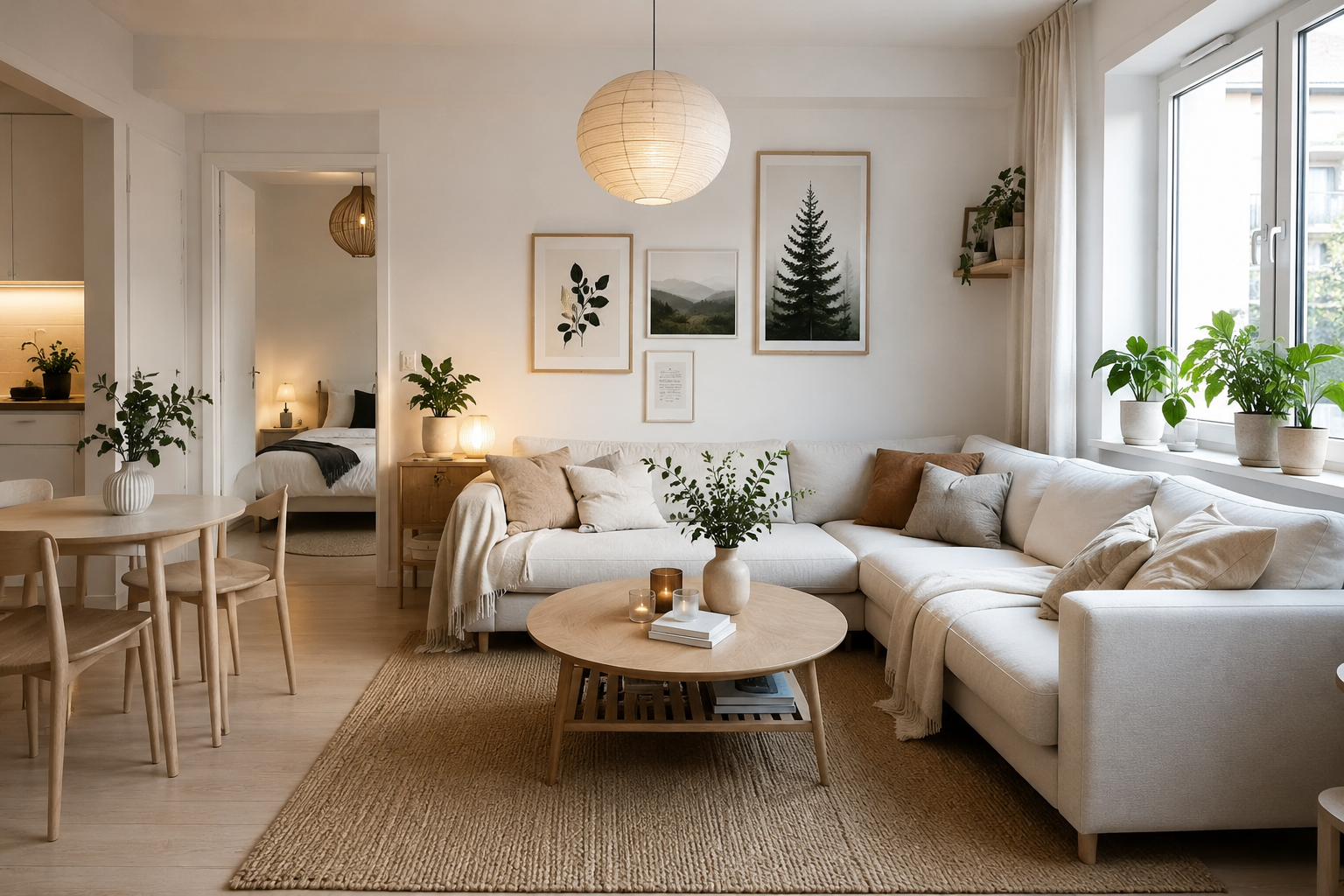
The Scandinavian living room shown above perfectly captures this aesthetic. A large cream-colored sectional sofa sits on a textured natural-fiber rug, while a light wood coffee table, neutral cushions, indoor plants, framed artwork, and warm pendant lighting create a relaxed and welcoming atmosphere.
Whether you’re decorating a small apartment, modern home, rental, or family living room, these Scandinavian interior design ideas can help you create a space that feels both sophisticated and comfortable.
What Is Scandinavian Interior Design?
Scandinavian interior design is a decorating style associated with Nordic countries such as Sweden, Denmark, Norway, and Finland.
The style emphasizes simplicity and practicality while maintaining a strong sense of warmth and comfort.
Typical Scandinavian interiors feature:
- Light neutral colors
- Natural wood
- Minimalist furniture
- Clean lines
- Soft textiles
- Indoor plants
- Simple artwork
- Functional storage
- Natural light
- Cozy lighting
- Organic textures
Unlike extremely strict minimalism, Scandinavian interiors are designed to feel lived-in and comfortable.
The goal is not to remove everything from the room. Instead, it is to remove unnecessary visual clutter while keeping the elements that make a home feel warm.
1. Start With a Neutral Color Palette
One of the easiest ways to create a Scandinavian interior is to establish a soft, neutral color palette.
Popular Scandinavian colors include:
- White
- Off-white
- Cream
- Beige
- Light gray
- Warm taupe
- Soft brown
- Muted green
- Pale blue
White walls are particularly common because they help maximize natural light and make rooms feel larger.
However, Scandinavian design doesn’t have to be completely white.
The living room shown in the image combines warm white walls and furniture with beige, brown, natural wood, and muted greenery.
This creates a much warmer appearance than using pure white everywhere.
A simple Scandinavian color formula
Try:
60% warm white or cream
30% natural wood and beige
10% muted accent colors
This creates a cohesive and calming Nordic-inspired interior.
2. Add Natural Wood Throughout the Room
Natural wood is one of the defining elements of Scandinavian home decor.
Light-colored woods are particularly popular because they complement neutral walls and help maintain a bright, airy atmosphere.
Consider incorporating:
- Oak
- Ash
- Birch
- Pine
- Light walnut
You can use natural wood for:
- Coffee tables
- Dining tables
- Chairs
- Shelving
- Cabinets
- Flooring
- Picture frames
- Decorative accessories
The dining table and chairs in the inspiration room add warmth without making the space feel visually heavy.
3. Choose Simple Scandinavian Furniture
Furniture in a Scandinavian home should be attractive but also functional.
Look for pieces with:
- Clean lines
- Simple shapes
- Slim profiles
- Natural materials
- Comfortable proportions
- Minimal ornamentation
A large cream sectional can work beautifully in a Scandinavian living room because it provides generous seating while maintaining a clean visual appearance.
When decorating a small apartment, avoid furniture that is unnecessarily bulky.
Instead, choose pieces that provide maximum comfort without consuming too much visual or physical space.
4. Create a Cozy Scandinavian Living Room
A Scandinavian living room should feel comfortable enough for everyday life.
The secret is combining minimalist furniture with soft, tactile elements.
Layer your living room with:
- Soft cushions
- Knitted blankets
- Textured rugs
- Linen curtains
- Natural wood
- Warm lighting
- Indoor plants
The inspiration room demonstrates this beautifully with a cream sectional, beige and white cushions, a textured rug, and a soft throw.
The result is minimalist without feeling cold.
5. Embrace the Hygge Feeling
Although hygge is a Danish concept rather than a strict interior design style, it is closely associated with the cozy atmosphere many people love about Scandinavian homes.
A hygge-inspired home emphasizes comfort, warmth, relaxation, and simple pleasures.
You can create this atmosphere with:
- Candles
- Warm lamps
- Soft blankets
- Comfortable seating
- Natural textures
- Wooden furniture
- Warm beverages
- Books
- Plants
- Soft ambient lighting
The goal is to create a room where you naturally want to slow down and spend time.
6. Let Natural Light Become Part of the Design
Natural light is extremely important in Scandinavian-inspired interiors.
Large windows can make a room feel brighter and more spacious while emphasizing the simplicity of the furniture and color palette.
To maximize daylight:
- Keep windows relatively unobstructed
- Use lightweight curtains
- Choose light-colored walls
- Avoid excessively dark furniture
- Position mirrors strategically
- Use reflective surfaces carefully
The large windows in the inspiration room allow daylight to illuminate the entire living area.
7. Choose Sheer or Lightweight Curtains
Heavy curtains can make a Scandinavian room feel darker and visually heavier.
Instead, consider:
- Sheer white curtains
- Linen curtains
- Cotton curtains
- Light beige curtains
Floor-length curtains can also make the ceiling appear taller.
For a particularly airy appearance, install the curtain rod slightly above the window and allow the fabric to fall naturally toward the floor.
8. Add Indoor Plants
Plants provide an easy way to introduce color and natural texture into a neutral Scandinavian interior.
The green leaves contrast beautifully against white walls and cream furniture.
Popular choices include:
- Fiddle leaf figs
- Monstera
- Pothos
- Snake plants
- Rubber plants
- ZZ plants
- Olive trees
- Small herbs
You don’t need dozens of plants.
A few strategically placed plants can provide enough greenery to make the room feel alive.
9. Use Plants as Scandinavian Decor
Plants don’t have to be placed randomly around the room.
Use them intentionally as part of the interior composition.
For example:
Large plant: beside the sofa or window
Medium plant: on a cabinet or side table
Small plant: on a shelf or windowsill
Simple ceramic or stone-colored pots work especially well with Scandinavian decor.
Choose containers in neutral shades such as:
- White
- Beige
- Gray
- Terracotta
- Natural stone
10. Use Scandinavian Wall Art
Scandinavian walls are usually decorated with restraint.
Instead of covering every wall with artwork, select a few pieces that complement the overall color palette.
Popular choices include:
- Botanical prints
- Landscape photography
- Abstract art
- Black-and-white photography
- Minimalist line drawings
- Nature-inspired artwork
The framed botanical and landscape artwork shown above adds personality without overwhelming the room.
Pro tip
Use similar frames throughout the room to create visual consistency.
Natural wood frames are particularly suitable for a Nordic interior.
11. Choose a Natural-Fiber Rug
A textured rug can transform a minimalist room from cold to cozy.
Natural-fiber rugs are especially appropriate for Scandinavian interiors.
Consider:
- Jute
- Wool
- Cotton
- Hemp
- Flat-weave rugs
The large textured rug in the inspiration room visually defines the seating area while adding warmth and tactile interest.
For a living room, choose a rug large enough to connect the main furniture pieces rather than using a very small rug floating in the middle of the room.
12. Mix Different Textures
A neutral room can become boring if everything has the same texture.
Scandinavian design solves this by layering different materials.
Try combining:
Wood + wool + linen + cotton + ceramic + glass + woven fibers
For example:
- Wooden coffee table
- Linen curtains
- Wool or jute rug
- Cotton cushions
- Ceramic vase
- Woven pendant light
The colors can remain neutral while the textures create visual depth.
13. Use Warm Scandinavian Lighting
Lighting is essential for creating a cozy Nordic atmosphere.
Instead of relying on a single overhead light, create several layers.
Use:
- Pendant lights
- Floor lamps
- Table lamps
- Wall lights
- Candles
- Small accent lights
The large paper pendant lamp in the inspiration image adds a soft, diffused glow and becomes a subtle focal point.
Choose warm-toned bulbs for evening lighting to create a more relaxing atmosphere.
14. Choose a Statement Pendant Light
A Scandinavian pendant doesn’t need to be extravagant.
Simple materials and organic shapes often work best.
Consider:
- Paper lanterns
- Light wood pendants
- Woven lamps
- Frosted glass
- Minimal metal fixtures
The goal is to create a light fixture that adds character without competing with the rest of the room.
15. Keep the Coffee Table Simple
A Scandinavian coffee table should be functional and visually uncomplicated.
Light wood is an excellent choice.
Decorate it with only a few objects:
- Ceramic vase
- Small plant
- Candle
- Coffee-table book
- Decorative bowl
Avoid covering the entire surface.
Negative space is an important part of modern minimalist living room design.
16. Create Functional Storage
Scandinavian design is strongly connected to functionality.
A beautiful room can quickly lose its minimalist appearance if everyday objects are left everywhere.
Use:
- Closed cabinets
- Floating shelves
- Storage benches
- Baskets
- Sideboards
- Built-in storage
Keep frequently used objects accessible while storing less attractive items behind doors.
This creates a cleaner visual environment without sacrificing practicality.
17. Scandinavian Interior Design for Small Apartments
Scandinavian design is particularly effective for small apartments.
The light colors, simple furniture, and functional storage help maximize limited space.
For a Scandinavian apartment, consider:
- Light-colored walls
- Multifunctional furniture
- Compact dining tables
- Vertical shelving
- Mirrors
- Natural wood
- Light rugs
- Hidden storage
- Minimal accessories
Instead of trying to make a small apartment look luxurious by adding more decorations, focus on making every piece useful.
18. Make a Small Living Room Look Bigger
If you’re working with limited space, Scandinavian design principles can make a significant difference.
Use light colors
Warm white and beige reflect more light and create an airy atmosphere.
Choose furniture with clean profiles
Slim legs and simple shapes create more visual breathing room.
Use a large rug
A properly sized rug can visually unify the space.
Keep pathways open
Don’t block circulation with unnecessary furniture.
Use vertical space
Shelves and wall-mounted storage reduce the need for bulky floor furniture.
Limit decorative objects
A few intentional pieces look better than excessive clutter.
19. Scandinavian Dining Area Ideas
The dining area in the inspiration image demonstrates how a Scandinavian dining space can connect naturally with the living room.
A light wood table paired with simple wooden chairs creates a cohesive look.
For a Nordic dining area, consider:
- Round wooden table
- Light oak chairs
- Simple pendant lamp
- Ceramic vase
- Neutral tableware
- Small plant
Round tables can be particularly useful in apartments because they make circulation easier and soften the geometry of the room.
20. Connect the Living Room and Dining Room
Open-plan Scandinavian interiors usually rely on a consistent color and material palette.
You don’t necessarily need identical furniture in every area.
Instead, repeat certain elements.
For example:
Living room: oak coffee table
Dining area: oak dining table
Living room: cream sofa
Dining area: cream ceramic vase
Both spaces: neutral colors and greenery
Repeating materials creates visual continuity.
21. Use a White and Wood Color Combination
One of the most recognizable Scandinavian combinations is white and natural wood.
White provides brightness.
Wood provides warmth.
Together they create a balanced interior that feels both clean and inviting.
You can introduce the combination through:
- White walls + oak furniture
- Cream sofa + wood coffee table
- White kitchen + wooden countertops
- White cabinets + wooden shelves
- White textiles + wooden flooring
This palette is especially useful for apartments with limited natural light.
22. Add Beige for a Warmer Nordic Interior
If traditional white Scandinavian interiors feel too cold to you, introduce beige.
Beige creates warmth without sacrificing the minimalist appearance.
Try:
- Beige cushions
- Beige curtains
- Cream sofa
- Natural-fiber rug
- Warm wood
- Taupe accessories
The inspiration image uses these tones effectively, resulting in a cozy minimalist living room that feels sophisticated rather than stark.
23. Use Natural Materials
Scandinavian interiors are strongly connected to nature.
Bring natural materials into the home through:
- Wood
- Wool
- Linen
- Cotton
- Rattan
- Jute
- Stone
- Ceramic
- Woven fibers
These materials add texture and make minimalist spaces feel more comfortable.
24. Scandinavian vs. Modern Minimalist Interior Design
Although Scandinavian and minimalist interiors share many characteristics, they aren’t exactly the same.
| Feature | Scandinavian Design | Modern Minimalism |
|---|---|---|
| Color | Warm neutrals | Often monochromatic |
| Furniture | Simple + comfortable | Extremely streamlined |
| Materials | Wood, wool, linen | Glass, metal, concrete |
| Atmosphere | Warm and inviting | Clean and restrained |
| Decoration | Minimal but personal | Very limited |
| Textures | Important | Often subtle |
| Comfort | Major priority | Function is primary |
Scandinavian design can therefore be thought of as a warmer and more comfortable interpretation of minimalism.
25. Scandinavian vs. Japandi Design
Scandinavian and Japandi interiors are often confused because both emphasize simplicity and natural materials.
Scandinavian design tends to feel:
- Brighter
- Softer
- More playful
- More colorful
- More casual
Japandi typically emphasizes:
- Deeper natural tones
- Japanese-inspired simplicity
- More restrained decoration
- Darker wood
- Stronger visual balance
Both styles can work beautifully in modern apartments.
26. Add Personal Items Without Creating Clutter
Minimalism doesn’t mean your home should feel impersonal.
Include objects that have meaning to you:
- Travel photographs
- Favorite books
- Handmade ceramics
- Family photographs
- Vintage objects
- Artwork
- Souvenirs
The trick is to display them selectively.
A Scandinavian home should feel lived-in, not empty.
27. Create a Scandinavian Bedroom
The same principles can easily be applied to the bedroom.
Choose:
- White or cream bedding
- Natural wood furniture
- Soft linen
- Neutral curtains
- Minimal artwork
- Warm lamps
- Green plants
Keep the bedside tables relatively uncluttered.
A simple lamp, book, and small ceramic object may be all you need.
28. Scandinavian Kitchen Design Ideas
A Scandinavian kitchen often combines functionality with natural materials.
Popular features include:
- White cabinets
- Wood countertops
- Open shelving
- Simple hardware
- Neutral backsplash
- Ceramic accessories
- Indoor herbs
- Minimal countertop clutter
If you have a small kitchen, open shelves can create an airy feeling, although closed storage is better for hiding everyday clutter.
29. Create a Cozy Scandinavian Home on a Budget
You don’t need to replace all your furniture to achieve this look.
Start with inexpensive changes.
Step 1: Declutter
Remove objects you don’t need.
Step 2: Introduce neutral textiles
Change cushions, blankets, and curtains.
Step 3: Add natural wood
A wooden coffee table or shelf can dramatically change the room.
Step 4: Add plants
Use affordable plants to introduce natural color.
Step 5: Improve lighting
Replace harsh bulbs with warmer lighting.
Step 6: Add texture
Use a woven basket, textured rug, or knitted throw.
Step 7: Create visual consistency
Choose a limited color palette.
These simple changes can make an existing apartment feel much more Scandinavian without requiring a complete renovation.
30. Scandinavian Decor Ideas Under $100
If you’re decorating on a budget, prioritize small changes with a large visual impact.
Try:
- Neutral cushion covers
- A woven basket
- Small ceramic vases
- Simple framed prints
- A small indoor plant
- A wooden tray
- Linen-look curtains
- Warm light bulbs
- A textured throw
You don’t need expensive designer furniture to create the Nordic aesthetic.
31. Scandinavian Interior Design for Renters
Scandinavian style is also excellent for rental apartments because many of its elements don’t require permanent changes.
Try:
- Removable artwork
- Freestanding shelves
- Neutral textiles
- Indoor plants
- Floor lamps
- Wooden furniture
- Decorative mirrors
- Temporary lighting
- Woven baskets
These additions can transform a rental without changing the walls or built-in features.
32. Common Scandinavian Interior Design Mistakes
Even minimalist interiors can become visually unbalanced.
Avoid these common mistakes:
Too much white
An entirely white room can feel cold.
Solution: Add wood, beige, plants, and warm textiles.
Too much furniture
Minimalism requires breathing room.
Solution: Keep only useful pieces.
Too many tiny decorations
Small accessories can create visual noise.
Solution: Choose fewer, larger, more intentional objects.
Cold lighting
Blue-toned lighting can destroy a cozy atmosphere.
Solution: Use warm lighting in the evening.
No texture
A room can feel flat if everything has the same surface.
Solution: Mix wool, linen, wood, ceramic, and woven materials.
33. How to Make Scandinavian Decor Feel More Luxurious
Scandinavian design can look sophisticated without being expensive.
Focus on:
- Quality-looking fabrics
- Consistent colors
- Natural materials
- Large artwork
- Properly sized rugs
- Minimal clutter
- Elegant lighting
- Well-proportioned furniture
A simple room with excellent proportions often looks more expensive than a room filled with decorative objects.
34. Scandinavian Living Room Styling Formula
If you’re not sure where to begin, use this simple formula:
Foundation
Warm white walls + natural wood flooring
Main furniture
Cream or beige sofa
Textiles
Neutral cushions + soft throw
Floor
Large textured rug
Table
Light wood coffee table
Lighting
Simple pendant + warm accent lamps
Decor
Minimal artwork + ceramic accessories
Nature
Two or three indoor plants
This combination creates a classic Scandinavian living room without making the design complicated.
35. Scandinavian Interior Design Checklist
Before finishing your room, ask:
- Is the color palette neutral?
- Is there enough natural light?
- Have I included natural wood?
- Is the furniture functional?
- Are the walking paths clear?
- Have I added comfortable textiles?
- Is the lighting warm?
- Are there a few indoor plants?
- Is the wall art simple?
- Is the room free of unnecessary clutter?
- Do different areas share similar materials?
- Does the room feel comfortable rather than sterile?
If most answers are yes, you’re well on your way to creating a Scandinavian-inspired home.
Frequently Asked Questions
What is Scandinavian interior design?
Scandinavian interior design is a style based on simplicity, functionality, natural materials, neutral colors, clean lines, and comfort. It creates bright, practical, and cozy interiors.
What colors are used in Scandinavian interiors?
White, cream, beige, light gray, warm taupe, pale blue, muted green, and natural wood tones are common Scandinavian colors.
How do I make my living room Scandinavian?
Start with a neutral color palette, simple furniture, natural wood, soft textiles, a textured rug, indoor plants, minimalist artwork, and warm lighting.
Is Scandinavian design the same as minimalism?
Not exactly. Scandinavian design shares minimalist principles but generally feels warmer, softer, and more comfortable.
How can I make a small apartment Scandinavian?
Use light colors, multifunctional furniture, natural wood, vertical storage, mirrors, simple decor, and plenty of natural light.
What wood is best for Scandinavian furniture?
Light woods such as oak, ash, birch, and pine work particularly well with Scandinavian interiors.
What is hygge in interior design?
Hygge is a Danish concept associated with coziness, comfort, warmth, and enjoying simple everyday moments. It is often reflected in Scandinavian interiors through soft lighting, blankets, candles, natural materials, and comfortable furniture.
How do I make a white Scandinavian room feel warmer?
Introduce natural wood, beige textiles, plants, woven materials, warm lighting, and earthy accessories.
Final Thoughts
Scandinavian interior design is more than a visual trend. It’s an approach to creating a home that balances beauty, simplicity, functionality, and comfort.
The living room shown in the inspiration image demonstrates why this style works so well. The combination of a soft cream sectional, natural wood furniture, textured rug, indoor plants, neutral artwork, large windows, and warm lighting creates an interior that feels bright and peaceful without looking empty.
The best Scandinavian homes aren’t completely bare. Instead, they are thoughtfully edited.
Choose furniture that serves a purpose. Bring in natural materials. Keep your colors soft and cohesive. Let daylight enter the room. Add comfortable textiles and greenery. Most importantly, leave enough space for the room to breathe.
Whether you’re designing a Scandinavian apartment, cozy living room, small home, or modern minimalist interior, these principles can help you create a space that feels timeless rather than trendy.
Keep it simple. Keep it natural. Keep it cozy. That’s the beauty of Scandinavian design.