
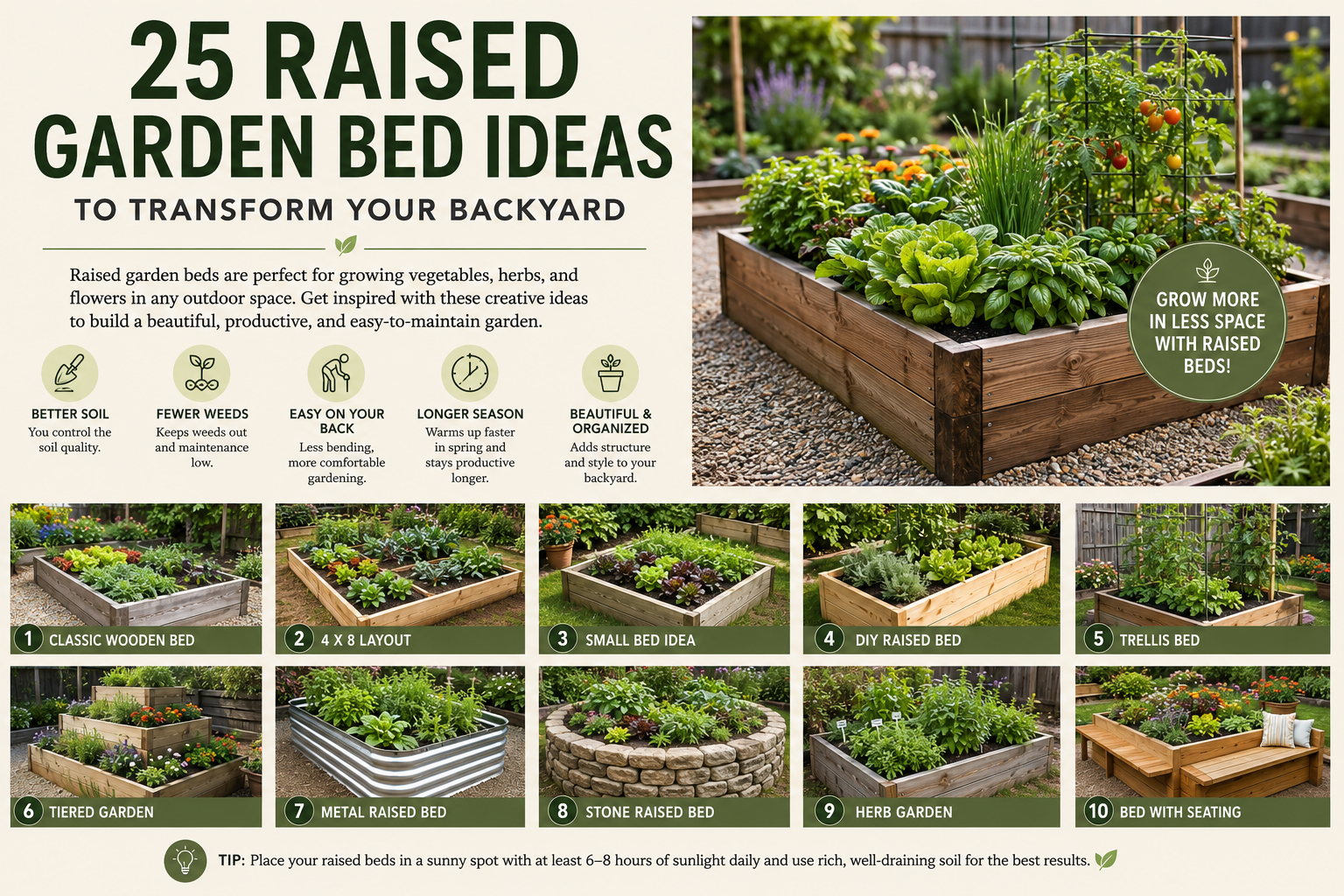
Raised garden beds are one of the easiest ways to grow vegetables, herbs, flowers, and fruits while making your garden more organized and attractive. Whether you have a large backyard, a small patio, or only a few square feet of outdoor space, the right raised garden bed can help you grow more while spending less time dealing with weeds and poor soil.
In this guide, you’ll discover 25 raised garden bed ideas for beginners and experienced gardeners, including DIY designs, small-space solutions, vegetable garden layouts, and budget-friendly options.
What Is a Raised Garden Bed?
A raised garden bed is a growing area where the soil is elevated above the surrounding ground. The bed is usually surrounded by wood, stone, metal, bricks, or another durable material.
Unlike traditional in-ground gardening, raised beds give you greater control over:
- Soil quality
- Drainage
- Garden layout
- Plant spacing
- Weed control
- Accessibility
They can also make gardening easier because you don’t need to bend as far when planting, watering, or harvesting.
25 Raised Garden Bed Ideas
1. Classic Wooden Raised Garden Bed
A simple wooden garden bed is one of the best choices for beginners.
Use untreated or garden-safe lumber to create a rectangular frame and fill it with high-quality soil and compost.
A classic 4 x 8 raised garden bed provides plenty of growing space while remaining easy to reach from both sides.
Best for: Vegetables, herbs, flowers, and beginner gardeners.
2. 4 x 8 Raised Garden Bed Layout
A 4 x 8-foot bed is one of the most practical sizes for a backyard vegetable garden.
You can divide the bed into sections for different crops. For example:
- Tomatoes
- Peppers
- Lettuce
- Carrots
- Radishes
- Basil
- Green onions
Leave enough space between plants for air circulation and harvesting.
A simple grid layout can also make crop rotation and succession planting easier.
3. Small Raised Garden Bed Ideas
You don’t need a large backyard to grow vegetables.
For a small garden, consider beds measuring:
- 2 x 4 feet
- 3 x 3 feet
- 2 x 6 feet
Smaller beds are particularly useful for balconies, patios, narrow yards, and rental properties.
Choose compact vegetables such as lettuce, radishes, spinach, herbs, and bush beans.
4. DIY Raised Garden Bed
Building your own raised bed can be much cheaper than purchasing a finished kit.
A basic DIY bed requires:
- Four boards
- Exterior-rated screws
- A drill
- Measuring tape
- Quality soil
- Compost
Cut the boards to your preferred dimensions, attach the corners, level the bed, and fill it with a mixture of garden soil and compost.
This is one of the easiest raised garden bed ideas for beginners.
5. Budget-Friendly Raised Garden Bed
Gardening doesn’t have to be expensive.
You can create inexpensive raised beds using reclaimed materials, old untreated boards, bricks, concrete blocks, or other garden-safe materials.
Before reusing wood, make sure it has not been treated with chemicals that could contaminate your soil.
The biggest investment should be the soil because healthy soil is essential for productive plants.
6. Raised Garden Beds With Trellis
Adding a trellis to a raised bed allows you to grow vertically.
This is particularly useful for:
- Cucumbers
- Peas
- Pole beans
- Small melons
- Climbing flowers
A trellis can also increase privacy and make a vegetable garden look more attractive.
For small gardens, vertical growing can dramatically increase the amount of produce you can grow without increasing your garden’s footprint.
7. Tiered Raised Garden Bed
A tiered garden bed uses multiple levels to create a staircase-like structure.
This design is ideal for sloped yards or gardeners who want to grow plants with different sunlight requirements.
You can place taller plants toward the back and smaller plants toward the front.
Tiered beds also create an attractive focal point in ornamental gardens.
8. U-Shaped Raised Garden Bed
A U-shaped garden bed provides a large growing area while keeping the center accessible.
The design is especially useful when you want plenty of planting space without walking through the soil.
Plant frequently harvested crops around the outside edges and reserve the center for larger plants.
9. L-Shaped Raised Garden Bed
An L-shaped raised bed works particularly well in corners.
It can turn an unused part of your backyard into a productive growing area.
Use one side for vegetables and the other for herbs or flowers.
This design is also useful for creating separate gardening zones without building multiple independent beds.
10. Raised Herb Garden
A raised bed is perfect for growing fresh herbs close to your kitchen.
Popular choices include:
- Basil
- Parsley
- Cilantro
- Thyme
- Rosemary
- Oregano
- Chives
- Mint
Keep aggressive herbs such as mint contained because they can spread quickly.
A small raised herb bed near the kitchen can provide fresh ingredients throughout the growing season.
11. Raised Vegetable Garden
One of the biggest advantages of raised beds is the ability to create a customized vegetable garden.
Consider combining plants with different growth habits.
For example:
Tall plants: tomatoes and trellised cucumbers
Medium plants: peppers and bush beans
Low-growing plants: lettuce, spinach, and herbs
This allows you to use vertical and horizontal space efficiently.
12. Raised Garden Bed for Beginners
If you’re completely new to gardening, keep your first bed simple.
Start with a 4 x 4-foot raised bed and grow easy vegetables such as:
- Lettuce
- Radishes
- Bush beans
- Zucchini
- Green onions
- Herbs
Avoid planting too many varieties at once.
A smaller, manageable garden gives beginners the opportunity to learn about watering, sunlight, soil, pests, and harvesting without becoming overwhelmed.
13. Metal Raised Garden Bed
Galvanized metal beds are a modern alternative to traditional wooden beds.
They are durable, visually appealing, and can last for many years.
Metal beds work particularly well in contemporary landscapes and can create a clean, minimalist appearance.
Choose a reputable garden-safe product and make sure the bed is appropriate for food gardening.
14. Stone Raised Garden Bed
Natural stone can create a beautiful permanent raised garden bed.
Stone blends naturally with outdoor landscapes and works especially well around:
- Cottage gardens
- Flower gardens
- Mediterranean landscapes
- Modern yards
Although stone beds can require more work to build, they can become a long-lasting feature of your garden.
15. Brick Raised Garden Bed
Brick is another attractive option for creating permanent garden beds.
Arrange bricks in a rectangular, square, or curved shape and fill the interior with soil.
Brick beds can give your garden a classic appearance while clearly separating planting areas from pathways.
16. Raised Garden Bed With Seating
Why not make your garden bed functional and comfortable?
Build a wide edge around the bed that can double as a bench.
This gives you a convenient place to sit while planting, harvesting, or simply enjoying your garden.
It can be especially helpful for gardeners who spend long periods working with their plants.
17. Raised Garden Bed for Small Yards
Small yards require smart planning.
Instead of building one huge bed, consider several narrow beds separated by walking paths.
A narrow bed can be easier to access and allows you to grow several types of plants without wasting space.
Vertical trellises can make the design even more productive.
18. Raised Garden Bed Along a Fence
The space along a fence is often overlooked.
A long, narrow raised bed can transform this unused area into a productive vegetable garden.
Add a trellis against the fence for climbing plants such as:
- Cucumbers
- Peas
- Beans
Make sure the bed receives enough sunlight before planting.
19. Keyhole Raised Garden Bed
A keyhole garden is designed with a central access area that allows you to reach most of the growing space without walking inside the bed.
Its circular shape makes it both functional and visually interesting.
This design is particularly useful when accessibility is an important consideration.
20. Raised Garden Bed With Hoop Cover
A simple hoop structure can be installed over a raised bed to support:
- Frost cloth
- Shade cloth
- Insect netting
- Plastic garden covers
This can extend the growing season and provide additional protection from weather and pests.
The cover should be selected according to your climate and the needs of your plants.
21. Elevated Raised Garden Bed
An elevated garden bed raises the growing area significantly above ground level.
This can make gardening more accessible to people who have difficulty bending or kneeling.
Elevated beds are also useful for patios, decks, and other areas where traditional garden beds aren’t practical.
22. Raised Flower Garden Bed
Raised beds aren’t only for vegetables.
You can create beautiful flower beds using:
- Marigolds
- Zinnias
- Lavender
- Salvia
- Coneflowers
- Petunias
Mix flowers with herbs and vegetables to create a productive garden that also attracts pollinators.
23. Modern Raised Garden Bed
For a contemporary backyard, use clean geometric shapes and simple materials.
Black or dark metal, smooth wood, stone, and minimalist pathways can create a sophisticated appearance.
Keep the planting design simple by repeating a few plant varieties throughout the garden.
24. Children’s Raised Garden Bed
A small raised bed can be an excellent way to introduce children to gardening.
Give children their own small section and let them choose a few easy crops.
Good choices include:
- Strawberries
- Radishes
- Lettuce
- Sunflowers
- Peas
- Cherry tomatoes
Growing food themselves can make gardening more exciting and educational for children.
25. Raised Garden Bed Combination
You don’t have to choose just one design.
A beautiful backyard can combine several raised garden bed ideas.
For example:
- Two 4 x 8 vegetable beds
- One herb bed
- A flower bed
- A trellis
- A small compost area
- Gravel pathways
This creates a complete backyard gardening system while keeping each area organized.
How to Choose the Right Raised Garden Bed
Before building your garden bed, consider five important factors.
1. Available Space
Measure your garden before purchasing materials.
Remember to leave enough space around each bed to walk, water, harvest, and maintain the plants.
2. Sunlight
Most vegetables require several hours of direct sunlight every day.
Observe your garden throughout the day before deciding where to build your raised bed.
3. Height
A low bed is inexpensive and easy to construct, while an elevated bed can provide greater accessibility.
Choose the height according to your needs.
4. Materials
Wood, metal, stone, and brick all have different appearances, costs, and lifespans.
Choose materials that are suitable for outdoor use and food gardening when growing edible crops.
5. Soil
Good soil is one of the most important parts of a successful raised garden bed.
Use a quality growing medium combined with organic matter such as finished compost.
Avoid filling a large bed entirely with expensive potting soil because it can become unnecessarily costly.
What to Plant in a Raised Garden Bed
Raised beds are suitable for a wide variety of plants.
Vegetables
- Tomatoes
- Peppers
- Lettuce
- Carrots
- Radishes
- Beets
- Cucumbers
- Beans
- Peas
- Kale
- Spinach
Herbs
- Basil
- Parsley
- Cilantro
- Thyme
- Oregano
- Chives
Flowers
- Marigolds
- Zinnias
- Lavender
- Sunflowers
- Coneflowers
Choose plants based on your local growing season, climate, sunlight, and available space.
How Deep Should a Raised Garden Bed Be?
The ideal depth depends on what you want to grow.
Many common vegetables can grow successfully in a bed around 8 to 12 inches deep, while plants with deeper root systems may benefit from more soil.
For crops such as carrots, potatoes, and certain root vegetables, providing additional depth can make growing easier.
The most important factor is ensuring that roots have enough room to develop and that the bed drains properly.
How to Fill a Raised Garden Bed
A simple approach is to use a quality soil mixture combined with compost.
For example, you can combine:
- Quality topsoil
- Compost
- Organic matter
Mix the ingredients thoroughly before planting.
Avoid using contaminated soil, fresh manure, or unknown materials that could harm plants or introduce unwanted chemicals into your garden.
Raised Garden Bed Layout Tips
A good layout can make your garden much easier to maintain.
Keep frequently harvested plants close to the edge.
Place taller crops where they won’t block sunlight from shorter plants.
Use trellises for climbing crops to save horizontal space.
Leave comfortable pathways between beds so you can access every plant without stepping into the soil.
For example, a simple 4 x 8 raised garden bed layout could divide the bed into several sections:
Section 1: Tomatoes
Section 2: Peppers
Section 3: Lettuce
Section 4: Carrots and radishes
Section 5: Herbs
You can change the layout depending on your climate and growing season.
Common Raised Garden Bed Mistakes to Avoid
Even a simple raised bed can fail if it is poorly planned.
Choosing the wrong location
A beautiful bed won’t produce much if it doesn’t receive enough sunlight.
Making the bed too wide
If you cannot comfortably reach the center, maintenance becomes difficult.
Using poor-quality soil
Plants depend on healthy soil for nutrients, drainage, and root development.
Planting too close together
Crowded plants compete for water, nutrients, and sunlight and may have poorer air circulation.
Forgetting drainage
Waterlogged soil can cause serious problems for many plants.
Building too many beds at once
If you’re new to gardening, start small and expand after you understand what works in your space.
Final Thoughts
The best raised garden bed ideas are not necessarily the most complicated or expensive. A simple wooden 4 x 8 bed can produce an impressive amount of vegetables, while a small 2 x 4 bed can transform a patio or tiny backyard into a productive growing space.
Start with the space you have, choose plants that match your climate, invest in quality soil, and create a layout that makes watering and harvesting easy.
Whether you want a modern metal garden, a DIY wooden bed, a small herb garden, or a productive vegetable garden, raised beds give you an easy way to create a more organized and enjoyable growing space.
Which raised garden bed idea would you try first?
25 Raised Garden Bed Ideas for Any Backyard
Discover 25 raised garden bed ideas for beginners, small yards, vegetables, herbs, DIY projects, and 4×8 layouts. Create a productive and beautiful backyard garden.raised garden bed ideasraised garden bed ideas for beginners, small raised garden bed ideas, 4 x 8 raised garden bed layout, DIY raised garden bed, raised vegetable garden ideas